Last updated: October 12, 2026. The cheapest home loan in the Philippines right now is a Pag-IBIG housing loan: 4.5% or 5.75% promo rates fixed for three years, up to ₱10M over 30 years, for members with 24 monthly savings. Banks charge about 7% to 8% on 1- to 5-year fixed rates but lend up to 90% of value with no ₱10M ceiling.
Below: dated rates by lender, requirements by borrower type, the income you need for a ₱4M loan and every fee. We review this guide after each BSP rate decision and whenever the Pag-IBIG promo changes.
Home Loan Philippines at a Glance (Updated October 2026)
- BSP policy rate: 5.00% after the August 27, 2026 hike, the third straight increase.
- Pag-IBIG maximum loan: ₱10M (up from ₱6M in May 2026), payable up to 30 years.
- Pag-IBIG promo rates: 4.5% (loans up to ₱4.9M) and 5.75% (above ₱4.9M to ₱10M), fixed for 3 years, for applications filed by December 31, 2026. The separate 3% Expanded 4PH socialized rate is fixed for 5 years and is not part of the promo deadline.
- Typical bank 1-year fixed rate: about 7.00% (as of September 1, 2026).
sabahay.ph is a listing platform, not a lender, so treat this as research, not financial advice. Start by running your own numbers in our loan calculator.
Home Loan Options in the Philippines Compared
Choose the right type of housing loan first, then the lender. Here is every path on one table, with the catch each one hides.
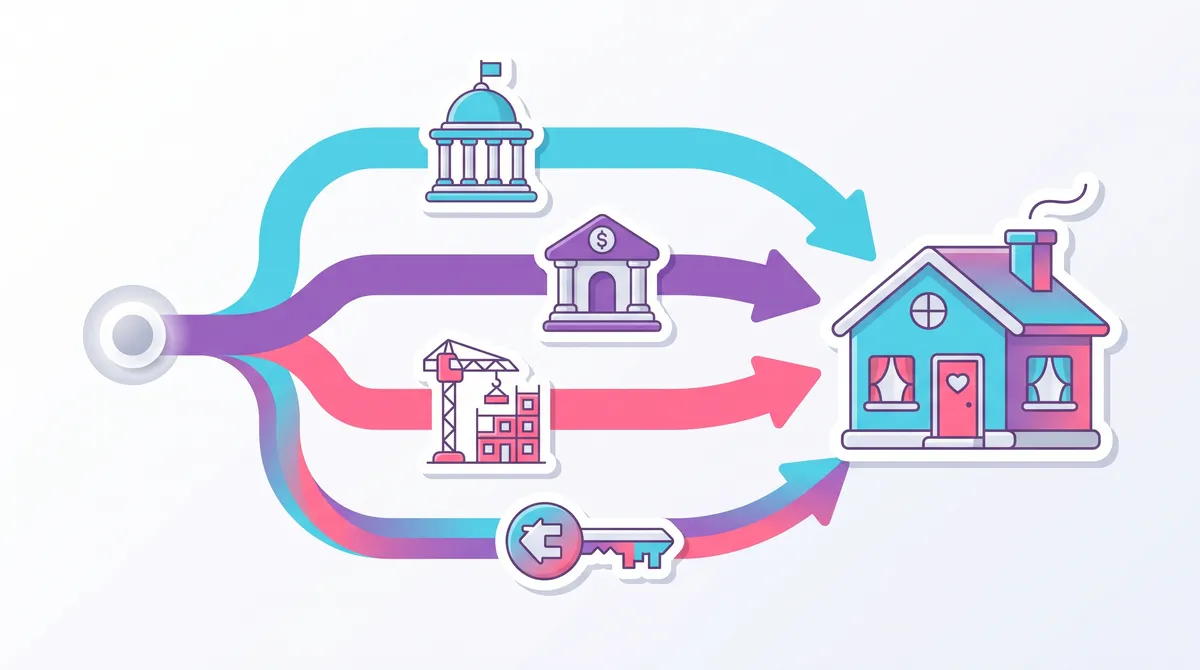
Decision table: Pag-IBIG vs bank vs SSS vs developer in-house vs rent-to-own
| Option | Typical rate | Max loan | Max term | Down payment / LTV | Main catch |
|---|---|---|---|---|---|
| Pag-IBIG | 4.5% (to ₱4.9M) / 5.75% (to ₱10M) promo, fixed 3 years; 3% Expanded 4PH socialized rate, fixed 5 years | ₱10M | 30 years, to age 70 | 95% / 90% of appraised value (2018 rule) | 24 monthly savings; promo ends Dec 31, 2026 |
| Bank | About 7% (1-year fix) to 8% (5-year) | No public cap | Varies | Up to 90% (BPI) | Rate resets after the fixing period |
| SSS | 8% to 11% by loan size | ₱2M | 30 years, to age 65 | 70% to 90% of appraised value | Workers' organization members only; 36 contributions |
| Developer in-house | 14% to 18% in a 2023 guide (ask) | Price less down payment | Often up to 5 years | 10% to 30% down | Expensive; plan a take-out loan |
| Rent-to-own (DMCI HomeReady) | Lease, no loan rate | Select RFO condos | Lease up to 36 months | 60%+ of rent credited; 10% to buy | One developer; balance still needs a loan |
Official pages: Pag-IBIG Regular Housing Loan and SSS Direct Housing Loan.
Which one should you pick?
- Salaried with (or able to reach) 24 Pag-IBIG savings: Pag-IBIG first if the loan is ₱10M or less and fits 35% of gross income; otherwise a bank.
- OFW: Pag-IBIG (savings payable as a lump sum) or a bank through an attorney-in-fact; see the OFW housing loan guide.
- Foreigner married to a Filipino: a bank loan with the Filipino spouse as primary borrower; otherwise cash or in-house.
- Pre-selling buyer: the developer's payment plan during construction, then a take-out loan at turnover.
Bank Housing Loan Rates in the Philippines (As of September to October 2026)
Bank housing loan rates in the Philippines cluster around 7.00% for a 1-year fixed period and 7.50% to 8.00% for 5 years.
Rate table by bank and fixing period
| Bank | 1-year | 3-year | 5-year | Source, as of |
|---|---|---|---|---|
| BPI | 7.00% | 7.75% | 8.00% | BPI site; Gulf News, Sept 1, 2026 |
| BDO (new to BDO) | 7.00% | 7.50% | 8.00% | BDO rate sheet, May 2026 |
| Security Bank | 7.00% | 7.25% | 7.75% | Gulf News, Sept 1, 2026 |
| PSBank | 7.00% | 7.25% | 7.50% | Gulf News, Sept 1, 2026 |
| China Bank | 7.50% | 7.50% | 8.00% | Gulf News, Sept 1, 2026 |
| EastWest | 7.00% | 7.75% | 7.99% | Gulf News, Sept 1, 2026 |
Longer fixes cost more: BPI quotes 10.25% for 10 years and BDO 9.75%. BDO's often-quoted 6.00% and 6.50% promo applied to applications from August 15 to October 31, 2025 and has expired, so we use its May 2026 sheet. Metrobank lists rates "updated as of June 16, 2026" for 1- to 5-year fixes; ask the branch. Treat every figure as indicative until a bank puts it in writing.
Why bank rates are rising: the 2026 BSP hikes
The Bangko Sentral ng Pilipinas started 2026 at 4.50%, cut to 4.25% on February 19, then hiked three times: to 4.50% on April 23, 4.75% on June 18 and 5.00% on August 27. The next decisions are due October 22 and December 17, 2026. The BSP sees average inflation above its 4% ceiling in 2026 and 2027, and ANZ Research and UnionBank both expect 5.25% by year-end (Philstar, September 22, 2026). Bank fixed rates follow this curve.
The "honeymoon rate" trap: what happens when the fixing period ends
That 7.00% lasts one year, then resets to a formula most borrowers never read. BDO's sheet spells it out: existing borrowers reprice at the highest of the 364-day T-bill reference rate plus 4%, the 1-year Bloomberg valuation or benchmark rate plus 3%, or the board rate. Get each bank's repricing formula in writing, compare total interest over the full term, and check the prepayment penalty (1% to 3% in early years at some banks).
Pag-IBIG Housing Loan: What Changed in 2026
Pag-IBIG released ₱84.36 billion in housing loans for 52,374 homes from January to July 2026, up 19%. This is the summary; the full Pag-IBIG housing loan guide covers the application in depth.
₱10 million ceiling and 30-year term
In late May 2026 Pag-IBIG raised its maximum housing loan from ₱6M to ₱10M per borrower, payable up to 30 years, to help absorb unsold units and serve middle-income members. Credit evaluation, capacity to pay and appraisal still apply.
3% / 4.5% / 5.75% rate tiers and the December 31, 2026 deadline
- 3% subsidized, for socialized housing under Expanded 4PH, fixed for the first 5 years (extendable by 5), with ceilings of ₱950,000 for a house and lot and ₱1.8M for a condo: about ₱4,005 a month on ₱950,000 over 30 years.
- 4.5% for loans above the socialized ceiling up to ₱4.9M: ₱2.5M over 30 years is about ₱12,667 a month, down from ₱15,393 at the old 6.25%.
- 5.75% for loans above ₱4.9M up to ₱10M: ₱10M over 30 years is about ₱58,357 a month.
Promo rates are fixed for three years, then repriced on the term you choose. The 4.5% and 5.75% promo is scheduled to run until December 31, 2026 for housing loan and acquired-asset installment applications; no 2027 extension has been announced, so confirm before applying. Pag-IBIG foreclosed properties bought on installment get the same rates.
Eligibility: 24 monthly savings, age limits, 35% income rule
You need 24 monthly savings (a lump sum is allowed), must be 65 or younger at application and no older than 70 at maturity (a full 30 years only if you are 40 or younger), and cannot have a Short-Term Loan in arrears. Under Circular 402 (2018), monthly repayment cannot exceed 35% of gross income, and up to three borrowers can tack their incomes.
Home Loan Requirements Checklist (Employed, Self-Employed, OFW, Foreigner)
Housing loan requirements differ more by borrower type than by lender. Metrobank wants Filipino citizens aged 21 and up with ₱40,000 gross monthly family income and 2 years with the current employer or 3 profitable years in business. BPI wants ₱40,000 household income and age 18 to 70 at maturity. SSS wants 36 contributions, 24 of them continuous.
Documents by borrower type (BPI's published list)
- Everyone: application form and 2 valid IDs.
- Employed: latest Certificate of Employment, last 3 months' payslips, latest ITR, authorization letter.
- Self-employed: DTI registration or Mayor's Permit, ITR with audited financial statements, 6 months' account statements, 3 supplier and 3 client references.
- OFW or seafarer: latest contract, proof of remittances and an attorney-in-fact with IDs; seafarers add crewing-manager details.
Lenders also ask for the property's title (TCT or CCT), latest tax declaration and Contract to Sell or Deed of Sale.
Foreigners and non-resident buyers
Banks generally lend to foreigners only when married to a Filipino, and BPI requires the Filipino spouse as primary borrower; otherwise it is cash or in-house financing. See our guide for foreigners buying property in the Philippines.
How Much Can You Borrow? Income Needed for a ₱4M Home Loan
The 35% rule and how lenders test capacity to pay
Lenders apply a cap to gross monthly income (35% at Pag-IBIG; banks use similar or stricter ratios after existing debts) and work back to the largest amortization you can carry. The appraised value, not the price, then caps the loan.
Worked comparison: Pag-IBIG vs bank on the same ₱4M loan
A ₱5M unit with 20% down is a ₱4M loan. Our calculation, standard amortization formula; an illustration, not an offer:
| Loan | Monthly payment | Income needed at 35% | Total interest |
|---|---|---|---|
| Pag-IBIG 4.5%, 30 years | ₱20,267 | ₱57,900 | ₱3.30M |
| Pag-IBIG 5.75%, 30 years | ₱23,343 | ₱66,700 | ₱4.40M |
| Bank 7.00%, 25 years | ₱28,271 | ₱80,800 | ₱4.48M |
| Bank 7.00%, 20 years | ₱31,012 | ₱88,600 | ₱3.44M |
| Bank 8.00%, 20 years | ₱33,458 | ₱95,600 | ₱4.03M |
| Bank 10.25%, 20 years | ₱39,266 | ₱112,200 | ₱5.42M |
The Pag-IBIG 5.75% loan costs ₱7,669 a month less than the 7% bank loan, mostly thanks to the 30-year term, yet pays about ₱960,000 more interest. One point higher (8% instead of 7%) adds ₱2,446 a month; stretching the bank loan to 25 years cuts ₱2,741 a month but adds about ₱1.04M in interest. Our home loan calculator Philippines guide shows how to test other prices and terms.
Down Payment and Equity: How Much Cash Do You Need?
BPI lends up to 90% of value, SSS 70% to 90% of appraised value, and Pag-IBIG's 2018 circular allows 95% within the economic housing limit and 90% above it. The catch: the percentage applies to the appraised value. If a bank appraises your ₱5M unit at ₱4.5M, a 90% loan is ₱4.05M and you need ₱950,000 in cash, not ₱500,000, plus closing costs.
Pre-selling payment plans vs RFO purchases
For a ready-for-occupancy unit, the loan is released once the title transfers. For pre-selling, you usually pay the down payment in installments to the developer during construction, then take out a bank or Pag-IBIG loan at turnover, approved on your income at that time. More in RFO vs pre-selling condo financing.
Step-by-Step: From Application to Loan Release
Bank timelines below are editorial estimates (listd.ph, May 2026), not lender commitments.
| Step | What happens | Typical time |
|---|---|---|
| 1. Pre-qualify and choose | Check income against the 35% cap; reserve a unit; collect title and tax papers | 1 to 2 weeks |
| 2. Apply | Submit the application and documents | 1 day |
| 3. Appraisal and approval | Collateral, employment and credit verified; letter of approval issued | 5 to 15 business days |
| 4. Sign and register | Deed notarized; title transferred and mortgage annotated | 4 to 8 weeks |
| 5. Release | Funds go to the seller; first payment about a month later | After annotation |
Plan on two to three months end to end with a bank. Pag-IBIG releases after the transferred title and post-approval documents arrive. Usual delays: a title and tax declaration that do not match, income proof that does not reconcile with the ITR, a low appraisal, and OFW paperwork without a proper special power of attorney.
The Real Cost of a Home Loan: Fees and Taxes Beyond Interest
Closing costs on a ₱5M property
| Cost | Rate | On ₱5M | Who usually pays |
|---|---|---|---|
| Documentary stamp tax | 1.5% of the highest of price, zonal or market value | ₱75,000 | Buyer (negotiable) |
| Local transfer tax | 0.5% to 0.75%, by city or municipality | ₱37,500 at 0.75% | Buyer |
| Notarial fee | 1% to 2%, or a negotiated fee | ₱50,000 to ₱100,000 | Buyer |
| Registration fee | LRA schedule | About ₱20,000 to ₱30,000 | Buyer |
| Capital gains tax | 6% | ₱300,000 | Usually the seller |
Excluding capital gains tax, that is roughly ₱182,500 to ₱242,500 (about 3.7% to 4.9% of the price) in cash before lender fees, per RCBC's first-home cost guide.
Lender fees: processing, appraisal, insurance, prepayment penalty
- Processing about ₱5,000 to ₱10,000 (or 0.5% to 1% of the loan); appraisal about ₱3,000 to ₱5,000.
- Mortgage redemption and fire insurance are required; ask for the quote. Some banks charge a 1% to 3% prepayment penalty in the first 3 to 5 years.
Financing a Pre-Selling Condo: In-House, Take-Out and Rent-to-Own
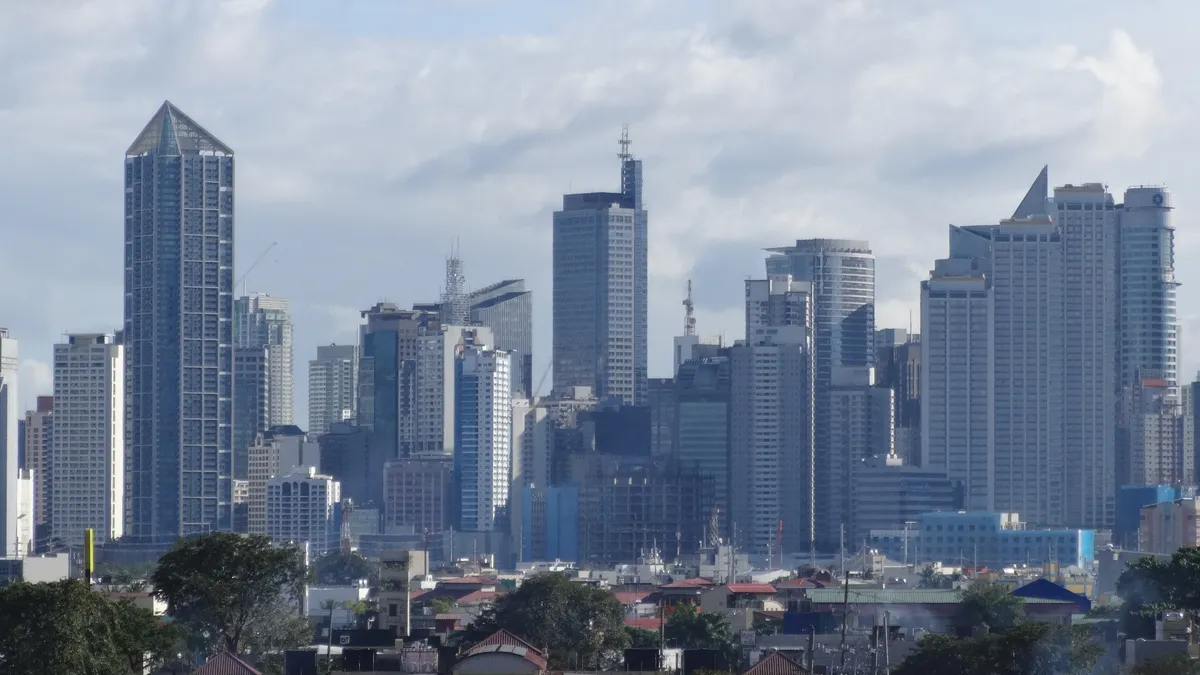
Metro Manila's unsold condo inventory hit a record 82,900 units in Q2 2026, which Leechiu Property Consultants expects to take 34 months to absorb, against a historical average of up to 12. In Q3 it eased to about 80,000 units, or 28 months of supply (Leechiu via Philstar, October 8, 2026). Leechiu's research director, Roy Golez Jr., says take-up is improving but expects falling rents to pull secondary and primary prices down. Buyers have leverage.
In-house financing vs a bank take-out loan
In-house financing asks for 10% to 30% down and less paperwork, but rates run far above banks or Pag-IBIG (a 2023 guide quoted 14% to 18%; ask for current terms) and terms are often five years or less. The usual play: the developer's plan during construction, then a Pag-IBIG or bank take-out at turnover.
Maceda Law protections (RA 6552)
The Realty Installment Buyer Act protects you if payments stop. After 2 years of installments (down payments count), you get one month's grace per year paid, once every 5 years, and on cancellation a refund of 50% of payments, plus 5% a year after year five, up to 90%. Under 2 years, you get at least 60 days' grace. Cancellation takes effect 30 days after you receive a notarized notice.
Rent-to-own and other terms to ask for
Ask for longer down-payment spreads, waived fees or rent-to-own. DMCI Homes' HomeReady leases select RFO condos for up to 36 months, credits at least 60% of lease payments to the price, then lets you buy with as little as 10% of the contract price or walk away. Colliers, quoted in a DMCI press release, said it knows of no other developer with this setup.
Why Home Loans Get Denied and How to Improve Your Approval Odds
The usual reasons: amortization above the 35% cap after existing debts, payslips and ITR that do not reconcile, under 2 years employed or 3 years in business, thin or damaged credit (including an overdue Pag-IBIG Short-Term Loan), and title or appraisal problems.
A 90-day pre-application checklist
- Pay Pag-IBIG savings as a lump sum to reach 24 months.
- Clear credit card balances and any Short-Term Loan arrears.
- File your latest ITR so payslips, COE and statements tell one story.
- Add a co-borrower, or pick a cheaper unit or longer term.
- Get the seller's title, tax declaration and clearances early.
Next Steps: Run the Numbers and Browse Homes
Find the price range that fits 35% of your income, then browse homes for sale within it. Rates and fees here are indicative, not financial advice; confirm every figure with the lender before signing.
Frequently Asked Questions
What are the requirements for a home loan in the Philippines?
Pag-IBIG needs 24 monthly savings (lump sum allowed), age 65 or under at application and 70 at maturity, and no overdue Short-Term Loan. Metrobank wants ₱40,000 monthly family income and 2 years employed or 3 years in business; BPI wants ₱40,000 household income, 2 valid IDs, a COE, payslips and an ITR.
What is the interest rate for a home loan in the Philippines in 2026?
Pag-IBIG's promo rates are 4.5% (up to ₱4.9M) or 5.75% (above ₱4.9M to ₱10M), fixed for 3 years, for applications filed by December 31, 2026; eligible socialized-housing borrowers get 3% under Expanded 4PH. Banks quote about 7% for a 1-year fix and 7.5% to 8% for 5 years (September 2026). SSS charges 8% to 11%.
Is a Pag-IBIG housing loan better than a bank loan?
Usually on cost. On a ₱4M loan, Pag-IBIG at 5.75% over 30 years is about ₱23,343 a month versus about ₱31,012 at a bank at 7% over 20 years (our calculation). A bank makes more sense if you need more than ₱10M or are past Pag-IBIG's age limits.
What is the maximum housing loan in the Philippines?
Pag-IBIG lends up to ₱10M per borrower (raised from ₱6M in May 2026) over up to 30 years. SSS tops out at ₱2M. Banks have no fixed public cap; BPI lends up to 90% of appraised value, subject to income and credit.
How much salary do I need for a ₱4 million home loan?
At a 35% cap, a ₱4M Pag-IBIG loan at 5.75% over 30 years (₱23,343 a month) needs about ₱66,700 gross monthly income. A bank loan at 7% over 20 years (₱31,012) needs about ₱88,600. Our calculation, not a lender offer.
Can OFWs and foreigners get a home loan in the Philippines?
OFWs can, through Pag-IBIG (savings payable as a lump sum) or banks such as BPI using an employment contract, proof of remittances and an attorney-in-fact. Foreigners generally need a Filipino spouse as primary borrower; otherwise it is cash or developer in-house financing.