Last updated 12 October 2026. Rates and fees are as of that date. General information only, not financial or legal advice.
Buying your first home in the Philippines comes down to ten steps: set a budget, choose your financing, pick the property, gather documents, check the title and developer, reserve and sign, pay the taxes and fees, close the loan, transfer the title and inspect the unit at turnover. This first time home buyer Philippines guide walks through each of the steps to buy a house in the Philippines with peso examples, current rates and the checks that protect your money.
First time home buyer Philippines: key takeaways for 2026-2027
- Rates are rising, not falling. The BSP raised its policy rate to 5.0% on 27 August 2026, its third hike this year, and meets again on 22 October.
- Pag-IBIG promo rates have a deadline. 4.5% for loans above the socialized-housing ceiling up to ₱4.9M and 5.75% from ₱4.9M to ₱10M, fixed for three years, for applications filed by 31 December 2026.
- Closing costs are smaller than the old "budget 10%" advice. On a ₱3M home, sale-side taxes and fees run about 2.5%-2.7% of the price, plus loan charges.
- Verify before you pay. Get a Certified True Copy of the title and confirm the developer's license to sell before paying any reservation fee.
The BSP's Residential Property Price Index shows nationwide home prices up only 0.4% year-on-year in Q2 2026, the slowest since the series began in 2019, and down 2.7% outside Metro Manila. Inflation reached 7.2% in September, and a contributed Philstar story (8 October 2026) reports growing unsold inventory, which gives buyers room to negotiate on price and inclusions.
Step 1: Work out what you can really afford
The 30% and 35% rules
A common rule of thumb keeps housing costs under about 30% of net monthly income, and Pag-IBIG caps the monthly amortization at 35% of gross monthly income. On a ₱40,000 net income, ₱12,000 a month supports a loan of roughly ₱2.37M at 4.5% over 30 years, ₱1.95M at 6.25% over 30 years, or ₱1.46M at a bank's 7.75% over 20 years.
Worked example: a ₱3 million condo at different rates
Assume a ₱3,000,000 unit, 10% down (₱300,000) and a ₱2,700,000 loan. Illustrative monthly payments before insurance, and the gross income that keeps each payment at 35%:
| Lender and rate | Term | Monthly payment | Gross income at 35% |
|---|---|---|---|
| Pag-IBIG promo 4.5% (fixed 3 years) | 30 years | ₱13,681 | about ₱39,100 |
| Pag-IBIG regular 6.25% (3-year repricing) | 30 years | ₱16,624 | about ₱47,500 |
| BPI 7.75% (3-year fixed) | 20 years | ₱22,166 | about ₱63,300 |
Every rate reprices after its fixing period, so test your budget one or two points higher. The Pag-IBIG row uses the ₱4.9M promo bracket confirmed in Pag-IBIG's statements through 3 September 2026; if your loan lands in the 5.75% band instead, the payment is about ₱15,756.
Cash you need on day one
Cash to close on the same ₱3M purchase with a bank loan, if the contract puts the sale-side taxes and fees on you:
| Item | Basis | Amount |
|---|---|---|
| Down payment | 10% of ₱3,000,000 | ₱300,000 |
| Documentary stamp tax (sale) | 1.5% of price | ₱45,000 |
| Transfer tax | 0.5% (province) to 0.75% (city) | ₱15,000-₱22,500 |
| Registration fee (indicative) | LRA sliding scale | about ₱14,646 |
| Documentary stamp tax (loan) | ₱1.50 per ₱200 of ₱2.7M | ₱20,250 |
| Bank charges (BPI example) | Processing, appraisal, notarial | ₱16,300 |
| Total cash to close | about ₱411,000-₱419,000 |
That excludes the reservation fee, the notary's fee for the Deed of Absolute Sale, insurance, moving costs and condo dues. The 6% capital gains tax (₱180,000 here) is the seller's by law, and developers may add "miscellaneous fees", so ask for the itemized list. Run your own figures in the home loan calculator.
Step 2: Choose how you will pay (Pag-IBIG, bank or developer)
Pag-IBIG housing loan in 2026
Members can borrow up to ₱10 million over up to 30 years. For applications filed by 31 December 2026, the promo rate is 4.5% for loans above the socialized-housing ceiling up to ₱4.9M and 5.75% from ₱4.9M to ₱10M, fixed for three years, then repriced (the regular 3-year rate was 6.25% as of 1 September 2026). You need at least 24 monthly contributions; requirements and steps are in our Pag-IBIG housing loan guide.
Expanded 4PH is only for first-time homebuyers: a subsidized 3% rate, fixed for five years, on accredited socialized housing up to ₱950,000 (house and lot) or ₱1.8M (condo). Local members qualify with gross monthly income up to ₱47,855.82 in NCR or ₱34,685.82 elsewhere; OFWs qualify regardless of income. Pag-IBIG's July 2026 deck suggests 12 months of contributions here instead of 24; confirm on the Pag-IBIG housing loan page.
Bank home loans: indicative rates
| Bank (as of) | 1-year fixed | 3-year fixed | 5-year fixed |
|---|---|---|---|
| BPI (website, checked 12 October 2026) | 7.00% | 7.75% | 8.00% |
| Metrobank (16 June 2026 schedule) | 7.625% | 8.25% | 8.75% |
| China Bank HomePlus (1 September 2026) | 7.50% | 7.50% | 8.00% |
BPI asks for as little as 10% down (subject to appraisal), lends up to 90% over up to 30 years, and requires ₱40,000 minimum household income and a borrower no older than 70 at maturity. BDO's 6.00% one-year promo, for applications from 15 August to 31 October 2025, has expired (loans had to be booked by 31 March 2026). Compare lenders in our home loan guide for 2027.
Developer financing and pre-approval
In-house financing needs less paperwork but usually runs shorter and costlier than Pag-IBIG or a bank, so many buyers refinance at turnover. Either way, get pre-approved before you reserve; a declined loan after a non-refundable fee is the classic first-timer loss.
Step 3: Pick the property type and location
Condo, house and lot or townhouse
Which is cheaper depends on where you buy: in the BSP's Q2 2026 data, condos have the higher median price nationally, but houses cost more in major urban centers, and NCR houses have the highest median of all. See our condo vs house and lot comparison.
Pre-selling vs ready-for-occupancy (RFO)
Pre-selling spreads the down payment over construction; RFO lets you inspect exactly what you buy and move in sooner. Walk through a finished unit from the same developer first, and visit the area at 7pm on a weekday to judge traffic and noise. Full breakdown: RFO vs pre-selling condo.
Hazards and foreign ownership
Search the exact address on HazardHunterPH (GeoRisk Philippines, led by DOST-PHIVOLCS) for a seismic, volcanic and flood-hazard report. Private land may only be owned by Filipino citizens and qualified corporations (1987 Constitution, Art. XII); foreigners can own condo units while foreign ownership in the project stays within 40% (RA 4726). See our guide to foreigners buying property in the Philippines.
Step 4: Documents needed for buying a house in the Philippines
Assemble these once and keep digital copies.
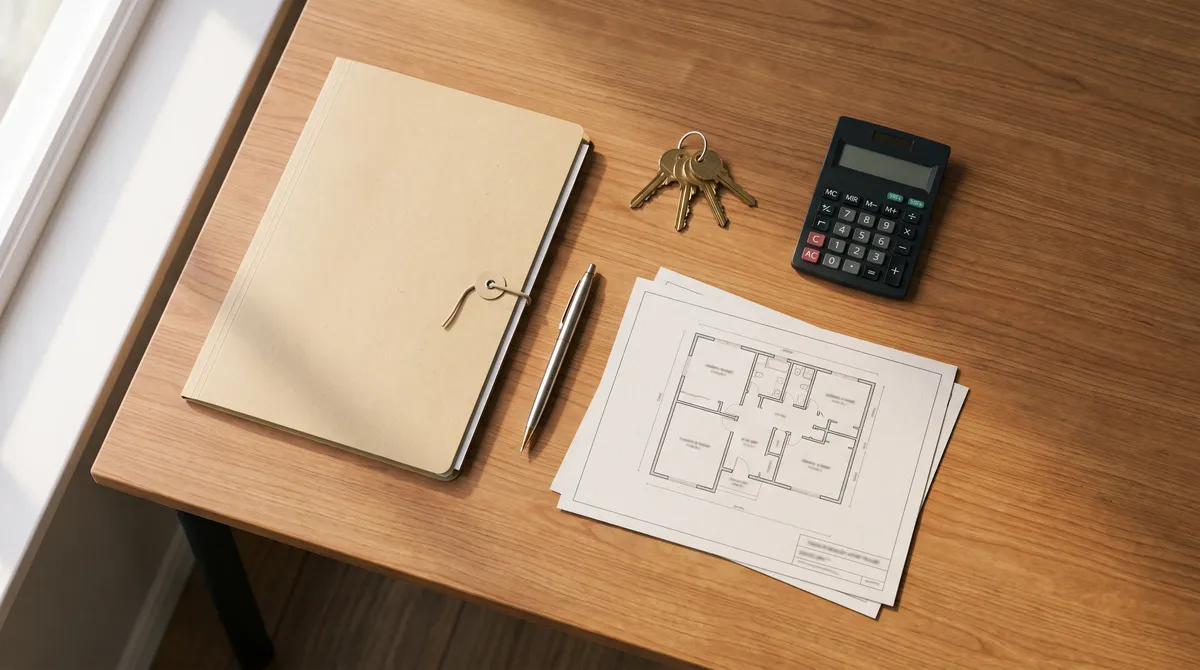
Buyer documents checklist
- Two valid government IDs and your TIN.
- Certificate of employment with compensation, recent payslips and BIR Form 2316 or ITR.
- Three to six months of bank statements (BPI asks for payroll-account statements with an authorization letter).
- PSA birth certificate, plus marriage certificate or CENOMAR where relevant.
- Self-employed: two years of ITRs, audited financial statements and six months of business bank statements.
Documents to ask the seller or developer for
- Owner's duplicate title (TCT for houses and lots, CCT for condos), or a photocopy for the bank.
- Updated tax declaration, real property tax clearance and the latest tax receipts.
- Lot plan or unit floor plan.
- The developer's license to sell and certificate of registration.
- At transfer: the BIR Certificate Authorizing Registration (CAR) and proof of transfer tax payment.
Step 5: What to check before buying a property in the Philippines
Due diligence is the step first-timers skip and regret, so finish it before paying anything non-refundable.
Verify the title at the Registry of Deeds
Never rely on the seller's copy. Request a Certified True Copy (CTC) from the Registry of Deeds (RD) with a request letter or Transaction Application Form, a photocopy of the title and your ID. It costs ₱196.97 for the first two pages at the local RD, or ₱644.97 elsewhere or through the eSerbisyo portal, plus ₱38.19 per extra page; electronic titles are ready after one working day (see the LRA FAQ page). Check that the owner matches the seller's ID, the technical description matches the lot, and there are no mortgages, liens or adverse claims annotated.
Check the tax declaration and real property tax
Get the updated tax declaration from the assessor and confirm real property tax (RPT) is paid. Once you own the home, RPT is yours: up to 1% of assessed value in provinces and 2% in cities and Metro Manila municipalities, plus a 1% Special Education Fund levy, with up to 20% off where the LGU rewards early payment.
Check the developer's license to sell (DHSUD)
PD 957 Sec. 5 bars any owner or dealer from selling a subdivision lot or condo unit without a license to sell, and Sec. 19 makes advertised facilities part of the sales warranties. The regulator is DHSUD (formerly HLURB), so ask for the license number and confirm it before paying. Also verify your broker's PRC license, use a lawyer on resale deals and never pay cash without an official receipt.
Step 6: Reserve the unit and read the contract
Reservation and contract checklist
Reservation fees are normally non-refundable, so the agreement should state the unit, total price, payment schedule and turnover date, and say in writing whether the fee comes back if your loan is denied. Resale deals usually start with a letter of intent plus earnest money. Under a Contract to Sell the seller keeps the title until you pay in full, and PD 957 Sec. 25 requires the developer to deliver it once you do; a Deed of Absolute Sale transfers ownership outright. Read the late-payment interest and cancellation clauses line by line.
Your rights if you cannot keep paying (Maceda Law)
RA 6552, the Maceda Law, protects installment buyers of residential property, including condos. After two or more years of installments you get one month of grace for every year paid (usable once every five years) and, on cancellation, a refund of 50% of everything paid, plus 5% a year beyond five years, up to 90%. With less than two years paid, you get at least 60 days' grace.
Cancellation takes effect only 30 days after a notarized notice (and, after two years, only once the refund is paid); down payments and deposits count as installments. PD 957 Sec. 23 separately lets you stop paying and claim a refund with legal interest if the developer fails to develop the project as approved.
Step 7: Taxes to pay when buying a house in the Philippines, and who pays
| Item | Rate | Base | Who pays by law | Who usually pays |
|---|---|---|---|---|
| Documentary stamp tax (sale) | 1.5% (₱15 per ₱1,000) | Higher of price or fair market value | Any party signing or accepting the deed (NIRC Sec. 173) | Commonly the buyer; check the contract |
| Capital gains tax | 6% | Higher of price or fair market value | Seller (NIRC Sec. 24(D)) | Seller, sometimes built into the price |
| Transfer tax | Up to 0.5% (provinces), 0.75% (cities) | Higher of price or fair market value | Seller (LGC Secs. 135, 151) | Often shifted to the buyer by contract |
| Registration fee | LRA sliding scale (about ₱14,646 on ₱3M) | Price | Not fixed by statute | Commonly the buyer |
| Documentary stamp tax (loan) | ₱1.50 per ₱200 (0.75%) | Loan amount | Borrower | Borrower, collected by the lender |
Deadlines: the DST return is due 10 days after the end of the month the deed is signed, the CGT return within 30 days of the sale, and the transfer tax within 60 days of the deed. The Registry of Deeds will not register the transfer until the BIR issues the CAR (NIRC Sec. 58(E)).
Why the numbers online disagree
Guides quote the registration fee as a flat 1% or 0.25%, but the LRA schedule posted in September 2026 works out to roughly 0.5% on ₱1.5M-₱5M homes. It came with a public-consultation notice on restructuring fees, so treat it as indicative and ask the RD for the computed figure. Notarial fees also vary: BPI charges ₱1,300 for its loan papers, while the notary sets the fee for the Deed of Absolute Sale.
Step 8: Loan approval, appraisal and signing
The lender appraises the property, verifies the title and tests your income (Pag-IBIG at the 35% ratio); ask for the timeline in writing. You then sign the Loan Agreement and Real Estate Mortgage and take out credit-life and fire insurance. OFWs can act through a Special Power of Attorney signed abroad and consular-authenticated or apostilled; see our OFW housing loan guide.
Step 9: Transfer the title into your name
- Sign and notarize the Deed of Absolute Sale.
- Pay the DST (and the seller's CGT) at the BIR office covering the property and secure the CAR.
- Pay the transfer tax at the city or provincial treasurer.
- Register the deed at the Registry of Deeds and receive the new TCT or CCT.
- Update the tax declaration at the assessor's office.
The RD needs the original deed, a certified copy of the latest tax declaration, the owner's copy of the title, the BIR CAR, an RPT clearance and proof of transfer tax payment. For deeds signed abroad the LRA lists consular authentication, though apostilled documents may be accepted instead; confirm the format and the processing time with the RD.
Step 10: Turnover inspection and moving in
- Test every outlet, switch, faucet and drain; check tiles, windows and ceilings for cracks or leaks.
- List every defect in writing and have the developer acknowledge it before you sign the turnover acceptance.
- For a house, ask for the certificate of occupancy.
- Transfer utilities, register for dues and building access, and ask the admin office about move-in rules.
Afterwards, keep digital copies of the deed, title and tax declaration, and put the loan repricing date in your calendar.
7 first-time buyer mistakes to avoid
- Skipping pre-approval.
- Underestimating cash to close.
- Trusting the seller's title copy instead of a CTC.
- Not reading the Contract to Sell's late-payment and cancellation terms.
- Buying on emotion without comparing the payment with local rents.
- Ignoring repricing after the fixed period.
- Paying anything before checking the license to sell and the title.
How to buy a house in the Philippines: your next steps
Run your numbers in the loan calculator, then browse homes for sale in the Philippines and shortlist two or three that fit the payment. Confirm rates with your lender and fees with the Registry of Deeds before you sign.
Frequently Asked Questions
How much money do I need to buy a house in the Philippines?
On an illustrative ₱3,000,000 purchase with 10% down and a bank loan, budget about ₱411,000-₱419,000 in cash: the ₱300,000 down payment plus sale DST, transfer tax, registration fee, loan DST and bank fees. The reservation fee, notarial fee, insurance and moving costs come on top.
What taxes and fees do I pay when buying a house in the Philippines, and who pays them?
Documentary stamp tax is 1.5% of the higher of price or fair market value, and the contract decides who bears it. The 6% capital gains tax is the seller's. Transfer tax is up to 0.5% in provinces and 0.75% in cities, on the seller by law but often shifted to the buyer.
What documents do I need to buy a house in the Philippines?
Buyer: two valid IDs, TIN, certificate of employment, payslips, BIR 2316 or ITR, bank statements and PSA certificates. Property: the TCT or CCT, updated tax declaration, tax clearance, floor or lot plan and the developer's license to sell.
Can I use Pag-IBIG as a first-time home buyer, and what is the rate in 2026?
Yes. Members can borrow up to ₱10M over up to 30 years. For applications filed by 31 December 2026, promo rates are 4.5% for loans above the socialized-housing ceiling up to ₱4.9M and 5.75% from ₱4.9M to ₱10M, fixed for three years. Expanded 4PH gives eligible first-time buyers a subsidized 3% rate on homes up to ₱950,000 (house and lot) or ₱1.8M (condo).
What are my rights if I cannot keep paying for a pre-selling unit?
Under the Maceda Law (RA 6552), buyers with at least two years of installments get one month of grace per year paid and, on cancellation, a refund of 50% of total payments, plus 5% a year after five years, up to 90%. With less than two years paid, you get at least 60 days' grace.