Rent to own house and lot in the Philippines means you move into a home and pay monthly amounts, part of which is credited toward the purchase price, with the option or obligation to buy at the end of a set term. It is not a single legal product, so your rights depend entirely on the contract you sign. This guide is a contract-and-cost checklist to use before you commit.
What Rent to Own House and Lot in the Philippines Means in 2027
In practice, you get the keys early, pay a reservation or option fee, and then pay monthly amounts for an agreed term. At the end, you either pay the balance in cash, take out a bank or Pag-IBIG loan, or walk away, depending on what the contract says.
The appeal is clear: lower upfront cash than a standard downpayment, no bank approval on day one, and faster move-in. That helps buyers with irregular income, thin credit records, or OFWs not yet ready to qualify for a loan. If you are still deciding on property type, read our condo vs house and lot comparison first.
Why 2027 matters: the Bangko Sentral ng Pilipinas (BSP) hiked policy rates at three straight meetings through August 2026, and analysts expected a fourth 25 bp hike in October 2026 to 5.25%, according to BusinessWorld's rate outlook (as of October 2026; the actual decision was not confirmed at the time of writing). Higher policy rates can push up in-house financing and bank takeout costs.
Lease with option to buy vs contract to sell
Rent-to-own is usually one of two things. A lease with option to buy is a rental agreement plus a right to purchase later. A contract to sell on installment means you are already a buyer paying in parts, and the seller keeps the title until you finish paying.
The label matters because buyer protections can differ. A pure lease may give you fewer rights than an installment sale, so read the title of the document and the actual clauses.
Who typically offers rent-to-own: developers, repossessed-unit sellers and private owners
Offers come from three groups. Developers sometimes run in-house installment or rent-to-own programs for unsold units. Sellers of repossessed units and private owners also offer it to widen their buyer pool.
Each carries different risks. Developers are regulated and must be licensed, while private owners may be selling a property with an unclear title or an existing mortgage, so verification matters more.
How Rent to Own Works Step by Step
The flow is similar across most deals, but fee names and amounts vary by seller. Always ask for a written computation showing every peso you will pay and how much is credited.
- Pick a unit and confirm the seller's right to sell or lease it.
- Pay a reservation or option fee to hold the property.
- Sign the contract after a lawyer has reviewed it.
- Pay a move-in deposit, if required, and take possession.
- Pay monthly amounts for the agreed term.
- Exercise the option: pay the balance in cash or through a loan, then process title transfer.
Under rent to own you get the keys first, but the title usually transfers only after full payment.

The money timeline from reservation to turnover of title
Expect these payment types: an option or reservation fee, a deposit, a monthly payment split into rent and credited portions, and a final balance, sometimes called a balloon or takeout. Ask which parts are refundable and which are credited.
Also ask when the title is actually conveyed. In most deals it happens only after the final balance is paid and transfer taxes and fees are settled.
Example: how credited rent reduces the balance
Example only, with invented round numbers, not real prices: a house and lot priced at PHP 3 million. You pay PHP 100,000 option money, then PHP 20,000 a month for 36 months, of which PHP 12,000 is credited to the price. Credits total PHP 432,000, plus the PHP 100,000 option money, if credited, making PHP 532,000.
The remaining balance would be PHP 2,468,000, which you must pay in cash or finance. If the contract says only the option money is credited, or nothing is, the balance is far larger. This is why the written computation matters.
Rent to Own vs Bank Loan vs Pag-IBIG: Which Fits You?
Rent-to-own trades approval ease for cost and risk. The table below compares the main routes qualitatively; for current rates and limits, check the lender directly.
| Option | Upfront cash | Approval | Title transfer | Main risk | Best for |
|---|---|---|---|---|---|
| Rent to own | Low to moderate | Usually easier | After full payment | Losing credits if you default; unclear title | Buyers building an income record |
| Developer in-house financing | Moderate | Easier than banks | After full payment | Higher rates, repricing terms | Buyers who cannot yet get a bank loan |
| Bank housing loan | Moderate to high | Stricter | After loan release | Rate changes, strict credit checks | Buyers with stable documented income |
| Pag-IBIG | Moderate | Based on membership and capacity | After loan release | Processing time, eligibility limits | Active members with contributions |
With BSP rates rising, in-house and bank takeout rates may be higher into 2027. Ask for the rate, repricing terms and any penalty in writing. Current Pag-IBIG terms are on the Pag-IBIG housing loan page, and our Pag-IBIG housing loan guide explains the process.
When rent to own makes sense
It can work as a bridge while you improve your income record, clear debts or finish your contributions. It also helps if you want to test a neighbourhood before committing.
It makes sense only if the title is clean, the credited amounts are written down and you can afford the monthly payments comfortably.
When a loan is the better route
If you already qualify for a bank or Pag-IBIG loan, a conventional loan often costs less overall, and you get a title path with clearer rules. Rent-to-own premiums and shorter terms can make the total higher.
Your Legal Protections: Maceda Law, PD 957 and DHSUD
The Maceda Law (RA 6552) protects buyers of residential property on installment. It generally gives a grace period of one month per year of installments paid, and a cash surrender value if you have paid at least two years of installments. Read the statute and get legal advice, since a pure lease may fall outside it.
PD 957 requires developers of subdivision and condominium projects to hold a license to sell and register their projects. Verify this with the DHSUD before paying anything.
What happens if you miss payments
If your deal qualifies as an installment sale, the Maceda Law generally requires the seller to follow notice and grace-period rules before cancelling, and to refund a cash surrender value in qualifying cases. These steps are not automatic in practice, so keep every receipt and written notice.
If your deal is a plain lease with option, the seller may treat missed payments as a lease default and keep the credits. Do not assume protection; ask a lawyer how your contract is classified.
Why wording like forfeiture and non-refundable matters
Clauses saying all payments are forfeited or non-refundable can be costly if you stop paying. Whether they hold up depends on the contract type and applicable law.
- Check what happens to credited rent on default.
- Check if option money is refundable.
- Check the seller's own default remedies, such as failure to deliver title.
Have a lawyer review the contract before signing; this article is general information, not legal advice.
Due Diligence Checklist Before You Sign
Most rent-to-own disasters start with a seller who cannot actually convey the title. Verify before you pay. The first-time homebuyer guide covers general checks; the ones below are specific to rent-to-own.
Documents to request
- Copy of the TCT, then verify it with the Land Registration Authority.
- Tax declaration and latest real property tax receipts.
- Proof of any mortgage, and the lender's written consent to sell or lease.
- For developers: license to sell and project registration, verified with DHSUD.
- Valid IDs and proof of authority if someone is selling for the owner.
Also inspect the house and lot in person: boundaries, flooding history, water and power connection, HOA dues and road access.
Red flags: no title in the seller's name, cash-only pressure and verbal promises
Walk away if the seller cannot show a title in their name, pushes cash-only payments with no receipts, or relies on verbal promises about credits and price.
Contract checks should cover:
- Who pays repairs, real property tax and association dues.
- What happens if the seller defaults.
- Whether the final price is fixed.
- How the final balance will be financed.
Costs and Taxes to Budget For
Monthly payments are only part of the cost. The table lists the usual items; amounts vary by seller and location, so ask for each one in writing.
| Cost item | Who usually pays | What to ask |
|---|---|---|
| Option or reservation fee | Buyer | Is it credited or refundable? |
| Deposit | Buyer | When is it returned, and for what deductions? |
| Monthly payment | Buyer | How much is rent and how much is credited? |
| Association dues | Often buyer | Current amount and any arrears? |
| Repairs and maintenance | Depends on contract | Who pays structural vs minor repairs? |
| Transfer taxes and fees | Negotiable | Who pays each item at title transfer? |
| Final loan costs | Buyer | Rate, processing fees, appraisal and insurance? |
Hidden costs people forget
When title is finally conveyed, costs may include documentary stamp tax, transfer tax, registration fees and possibly capital gains tax, depending on the seller. Amounts depend on the BIR and the local government, so confirm them with the Bureau of Internal Revenue and the local treasurer.
Also budget for unpaid utility or dues arrears, move-in repairs, and insurance on the home.
Stress-testing the final loan
Higher BSP rates may raise the cost of the final takeout loan in 2027. Use our home loan calculator to test the balance at your expected rate and at a higher one.
Example: a PHP 2.5 million balance over 20 years will have a noticeably larger monthly amortization at a higher rate than at a lower one. Check that you can still afford the higher figure, not just the best case.
Where to Look: House and Lot Areas for Rent to Own
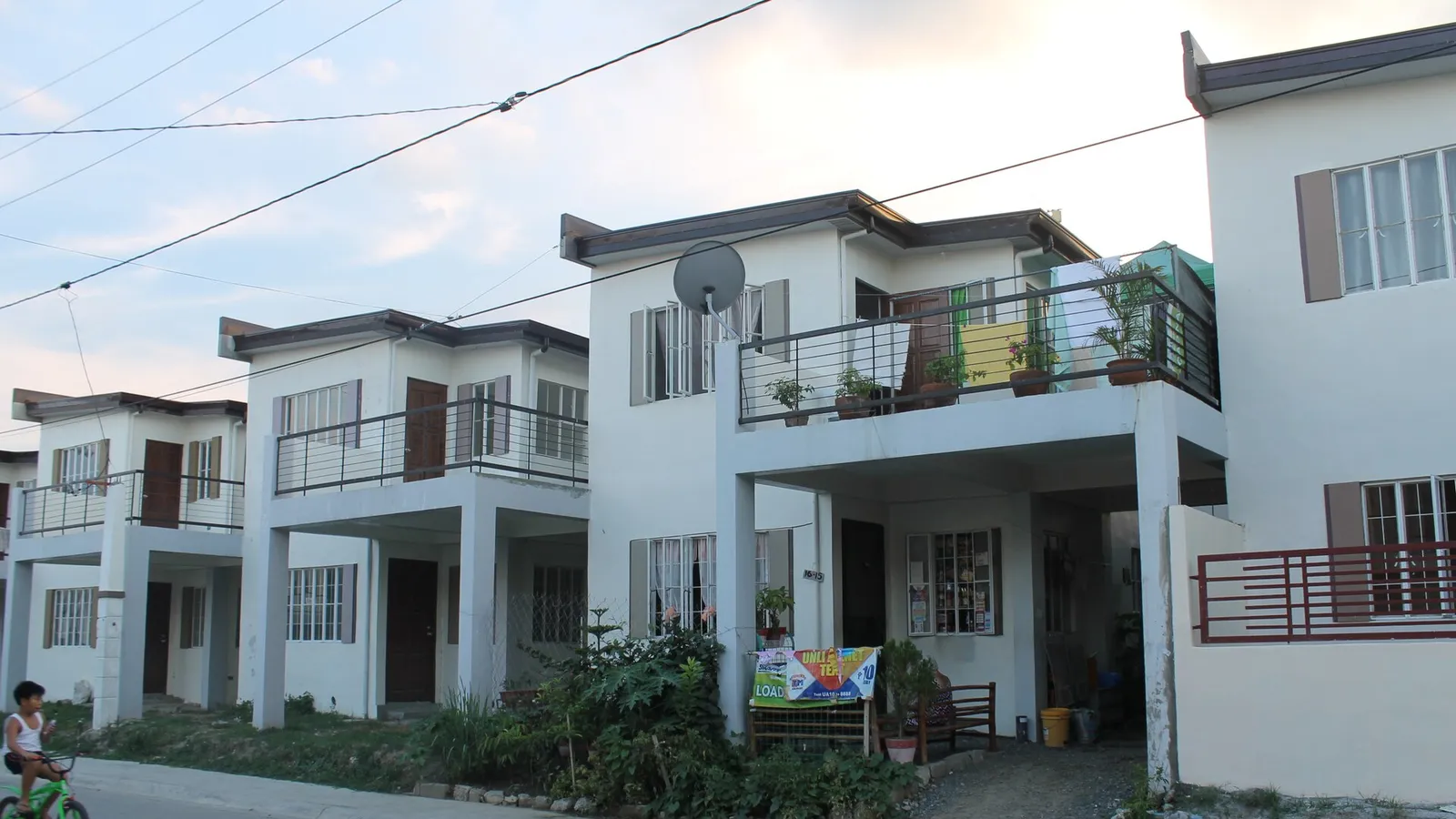
Rent-to-own house and lot supply is usually found in suburbs and provinces where land is cheaper, such as Cavite, Rizal, Batangas and Pampanga, plus outer Metro Manila areas. Commute, flooding, and school and hospital access matter more than the monthly figure.
Listings may not say if a unit is rent-to-own, so use search filters and ask sellers directly.
Cavite and Rizal: commuter-belt options
Cavite towns such as General Trias, Silang and Dasmariñas, and Rizal areas such as Antipolo, are common commuter-belt options. Browse houses and lots for sale in Cavite and ask which sellers accept installment or rent-to-own terms. Las Piñas offers an outer Metro Manila alternative with a shorter commute.
Visit at different times of day and during heavy rain to check traffic and flooding before paying a fee.
Provincial options and OFW buyers
Batangas and Pampanga offer more land for the budget, but check access to work, schools and hospitals. OFWs should assign a trusted representative, verify documents remotely and read the OFW housing loan guide before sending any money.
Never pay a reservation fee to a personal account without verifying the seller's identity and title first.
Conclusion: Is Rent to Own Right for You in 2027?
Rent to own suits buyers who need time and can reliably pay the monthly amounts. It is risky without a clean title and a protective contract.
Sign only if the title is clean, the credited amount and final price are in writing, and you have run the numbers at a higher interest rate. Confirm current rates and rules with the lender, developer, Pag-IBIG and DHSUD.
Ready to compare options? Search houses and lots on Sabahay and message sellers about rent-to-own terms.
Frequently Asked Questions
What is rent to own house and lot in the Philippines?
It is an arrangement where you occupy a house and lot and pay monthly amounts, part of which is credited toward the price, with an option or obligation to buy later. Legally it is usually a lease with option to buy or a contract to sell on installment, so the contract wording decides your rights.
Is rent to own a good idea in the Philippines?
It can be, if you need time to qualify for a loan and the seller has a clean title and a written contract. It is a poor idea with unclear titles, verbal promises or unaffordable payments. It often costs more overall than a conventional loan, so compare before signing.
Do I get my money back if I stop paying a rent-to-own house?
It depends on the contract. If it is an installment sale, the Maceda Law may give you a grace period and, after two years of payments, a cash surrender value. Under a pure lease, credits may be forfeited. Have a lawyer read the clauses before you sign.
Does the Maceda Law apply to rent to own?
It may, if the deal is in substance an installment sale of residential property. A pure lease may fall outside it. The label alone is not decisive, so read RA 6552 and ask a lawyer how your contract is classified before relying on its protection.
How much downpayment do I need for rent to own?
There is no fixed amount; it varies by seller and project. Some ask only a reservation or option fee and a deposit, others want more. Ask for a written computation showing what is credited, what is refundable and what you must pay before move-in.
Can an OFW avail of rent to own a house and lot?
Yes, many sellers accept OFW buyers, often through a representative holding a special power of attorney. Verify the title and seller remotely, avoid paying personal accounts without proof, and plan how the final balance will be financed through a bank or Pag-IBIG loan.
Will rising interest rates make rent to own more expensive in 2027?
They may. The BSP hiked rates three times through August 2026 and a fourth hike was expected in October 2026 (as of October 2026, unconfirmed), which can raise in-house and bank takeout rates. Ask for rates and repricing terms in writing and test the balance on a loan calculator.