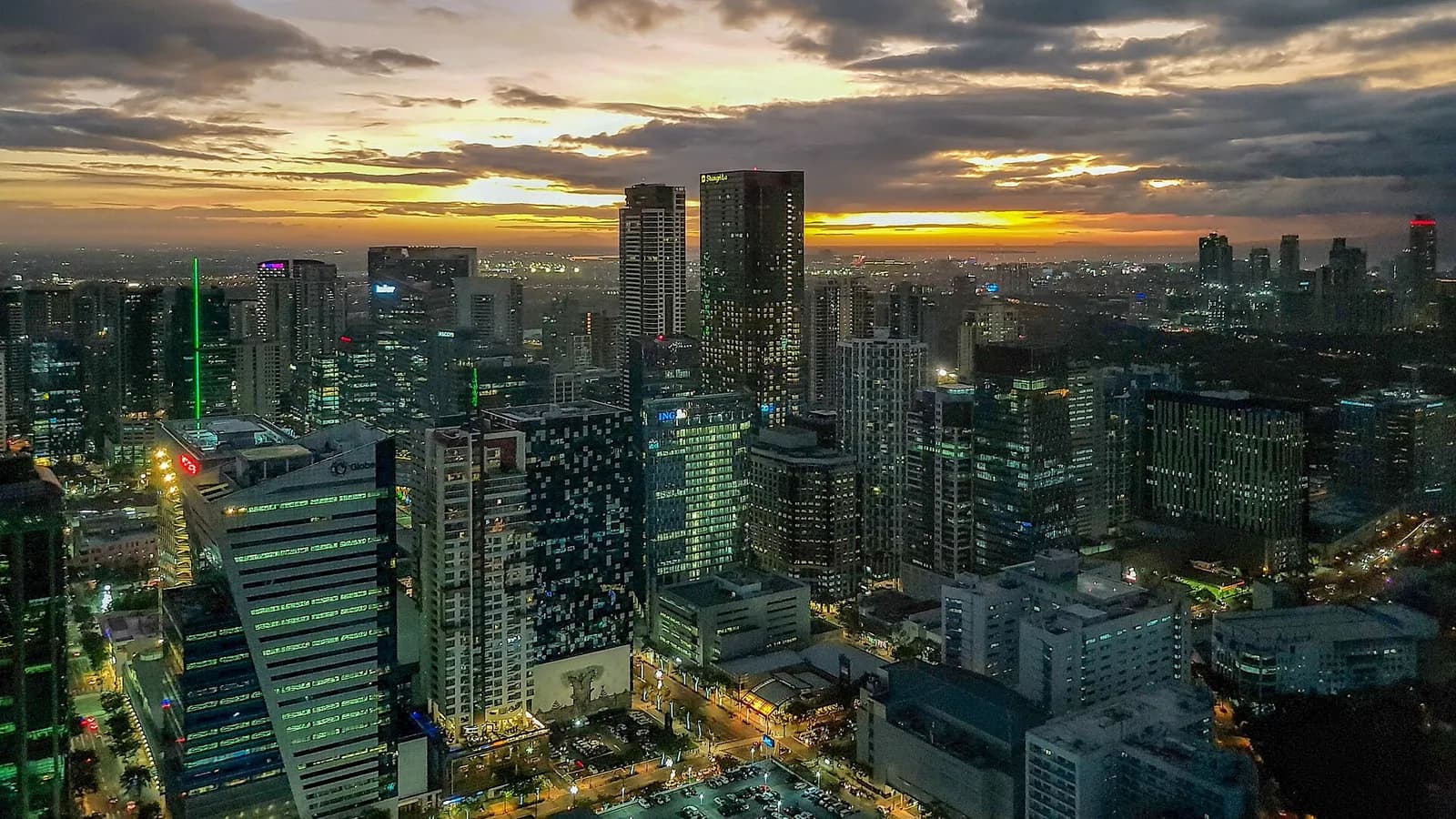
The Philippine real estate market outlook 2027 is a rates-and-inflation story first and an infrastructure story second. As of October 12, 2026, the Bangko Sentral ng Pilipinas (BSP) policy rate is 5.00% after three hikes this year, September inflation was reported at 7.2%, and the BSP's own forecast keeps inflation above target until Q3 2027.
Prices are split: the BSP's residential price index rose just 0.4% year on year in Q2 2026, yet NCR condos gained 7.4% while houses nationwide fell 4.1%. Our editorial read, not a forecast: 2027 looks like a selective, segment-by-segment recovery rather than a broad boom. Every number carries a date and a source, and we grade our April 2026 outlook at the end.
Philippine real estate market outlook 2027 in one minute (data as of October 12, 2026)
- Policy rate: 5.00% after hikes on April 23, June 18 and August 27, 2026, reversing February's cut to 4.25% (BSP).
- Inflation: 7.2% in September, up from 6.1% in August; the BSP projects averages of 6.1% for 2026 and 5.4% for 2027.
- Prices: RPPI +0.4% nationwide in Q2 2026; NCR +5.2%, outside NCR -2.7%; condos +6.0%, houses -4.1% (BSP).
- Condo supply: Leechiu counted a record 82,900 unsold Metro Manila condos in Q2 2026, easing to about 80,000 (28 months of supply) in Q3. Colliers puts vacancy at 24.9% (Q2), peaking at a record 25.6% by end-2026, and says developers are slowing launches.
- Remittances: +2.3% in cash terms for January-July 2026, slowing since the Middle East war (BSP data).
Update after the October 22, 2026 BSP meeting: decision to follow. 2TradeAsia's base case is a 25 bp hike, with 50 bps not ruled out (The Manila Times, October 12, 2026).
Refresh plan: January 2027, after the December 17 BSP meeting and the Q3 2026 RPPI report. Our April 2026 market outlook will then redirect here.
Interest rates, inflation and growth: the three numbers that decide 2027
Mortgage pricing, developer financing and buyer confidence all key off the BSP's policy rate, and in 2026 it did what our April outlook did not expect: it went back up.
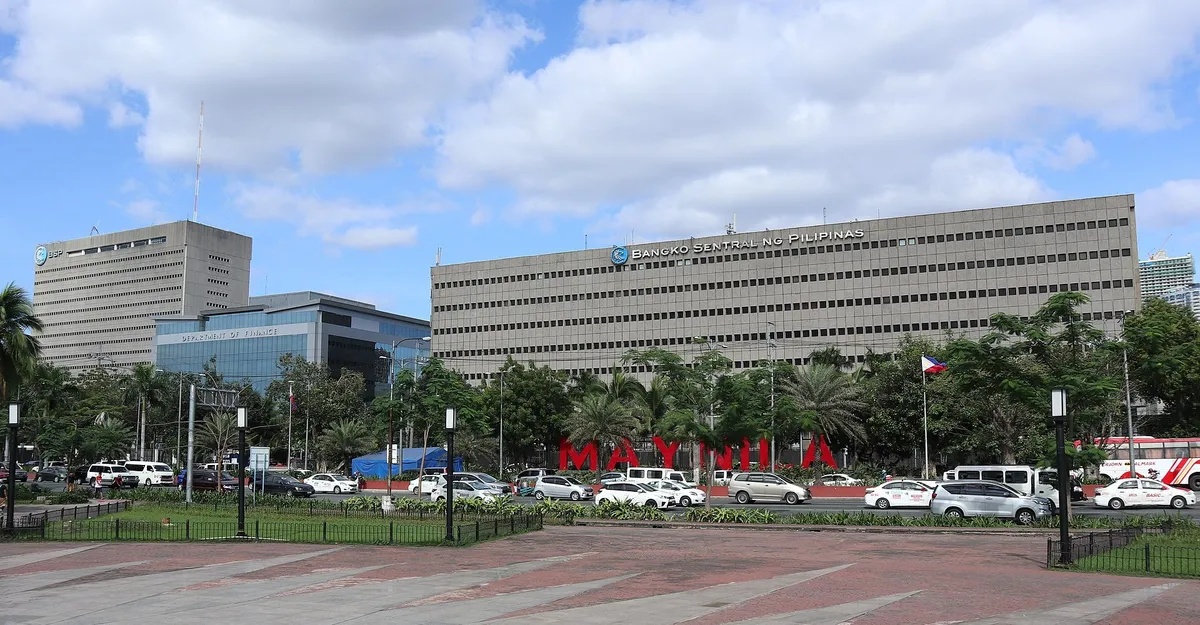
The BSP rate path: from 5.75% to 4.25%, then back to 5.00%
| Date | Decision | Policy rate after |
|---|---|---|
| Apr 10, Jun 19, Aug 28, Oct 9 and Dec 11, 2025 | Five cuts of 25 bps each | 5.75% down to 4.50% |
| Feb 19, 2026 | Cut 25 bps | 4.25% |
| Mar 26, 2026 | Off-cycle meeting, hold | 4.25% |
| Apr 23, 2026 | Hike 25 bps | 4.50% |
| Jun 18, 2026 | Hike 25 bps | 4.75% |
| Aug 27, 2026 | Hike 25 bps | 5.00% |
| Oct 22 and Dec 17, 2026 | Scheduled (2TradeAsia's October base case: +25 bps) | To be decided |
Sources: BSP policy decisions and the BSP 2026 meeting calendar. In the BSP's August 2026 survey of 21 forecasters, almost 70% expect another 25 to 75 bps of hikes in 2026 and easing in 2027. With 20- and 25-year Treasury yields above 8%, long fixed-rate mortgages stay expensive; our home loan guide for 2027 compares bank and Pag-IBIG financing.
Inflation: why the BSP says it stays above target until Q3 2027
In February 2026 the BSP projected inflation of 3.6% for 2026 and 3.2% for 2027. Then the Middle East conflict pushed oil prices up, April inflation hit 7.2%, and the August 2026 Monetary Policy Report now projects 6.1% for 2026, 5.4% for 2027 and 3.3% for 2028. In that path, inflation peaks in Q4 2026, stays above target until Q3 2027 and eases toward target by Q4 2027.
The biggest swing factor is weather: in the BSP's high-inflation scenario, a severe El Niño could lift rice prices about 40% over 12 months. Governor Eli Remolona calls El Niño "the scenario that we care about the most" (The Manila Times, October 10, 2026).
Growth, public construction and the infrastructure freeze
GDP grew 2.3% in Q2 2026, down from 5.4% a year earlier, as public construction contracted; Senate President Sherwin Gatchalian put the drop in public works construction at 32% (Philstar, October 8, 2026). The BSP expects growth to stay subdued for the rest of 2026 before recovering in 2027. Other stress signals: the peso closed at a record low of ₱62.9 per US dollar on October 8, 2026 (Philstar), hot-money outflows hit a net US$4.25B in January-August, and the proposed flood-control budget was cut to ₱107.4B.
What home prices are actually doing: the BSP residential property price index
The BSP's Residential Property Price Index (RPPI) is the official read on home values. Nationwide growth slowed from 7.5% in Q2 2025 to 1.9% in Q3, 1.6% in Q4, 4.5% in Q1 2026 and just 0.4% in Q2 2026, the slowest since the series began in Q1 2019. The split underneath is the real story of the real estate market in the Philippines going into 2027.
NCR +5.2% vs outside NCR -2.7%, condos +6.0% vs houses -4.1%
| Area (Q2 2026, year on year) | All types | Condominiums | Houses |
|---|---|---|---|
| Nationwide | +0.4% | +6.0% | -4.1% (first decline) |
| NCR | +5.2% | +7.4% | -3.1% |
| Areas outside NCR | -2.7% (first decline) | +3.4% | -4.5% |
| Balance GMA (Batangas, Bulacan, Cavite, Laguna, Pampanga, Rizal) | -3.0% | +0.2% | -4.1% |
| Metro Cebu | -0.2% | +6.4% | -6.7% |
| Metro Mindanao | +2.1% | -1.7% | +4.6% |
| Other areas | -5.3% | +7.0% | -8.5% |
Source: BSP Residential Property Price Index Report, Q2 2026. Bank lending agrees: condo loans rose 18.1% to 4,378 in Q2 2026 (NCR condo loans +11.7% to 2,604), while house loans fell 6.8% to 5,277.
What the RPPI does not tell you: it is built from bank appraisals of homes financed with housing loans granted in the quarter (79.6% for new units in Q2 2026). It excludes cash buyers, is not an asking-price index, and lags: developers can discount RFO units and see cancellations rise before the index registers it. NCR condos up 7.4% while cancellations climb is a timing gap, not a contradiction.
Metro Manila condos: unsold stock, vacancy and the launch slowdown
Consultancies count differently, so each figure names its source.
- Leechiu Property Consultants: a record 82,900 unsold units in Q2 2026 (34 months of supply), easing to about 80,000 (28 months) in Q3, with two-thirds priced ₱4M-₱12M (Philstar, October 8, 2026).
- Colliers (unsold stock): 79,200 unsold units at end-2025; unsold RFO units up from 27,900 in Q1 to 32,600 in Q2 2026; License to Sell approvals for just 38,000 units in H1 2026, down 82%.
- Colliers (vacancy): Metro Manila secondary-market condo vacancy was 24.9% in Q2 2026 (24.7% at end-2025) and is projected to peak at a record 25.6% by end-2026.
- Colliers Philippines (Q2 2026 briefing): developers are slowing Metro Manila condo launches because of elevated vacancies, rising buyer cancellations and weak demand (The Manila Times, August 4, 2026).
- Leechiu Property Consultants (Q2 2026 briefing): residential reservation cancellations rose from Q1 to Q2, and the PSE property index was about 55% below its 2019 level.
Which segments are holding up
Colliers says mid-income condos, priced at roughly ₱3.6M to ₱12M, took 70% of net pre-selling demand in 2025, and it named economic-to-affordable NCR condos a bright spot in its Q2 2026 briefing. Arthaland reported 50% take-up at Liv North on Katipunan, Quezon City (September 2026). Among pre-selling projects in Metro Manila, that band is where demand has held up.
Policy levers: Pag-IBIG ₱10M ceiling, 4PH inventory modality, RPVARA
- Pag-IBIG loan ceiling: ₱10M, up from ₱6M (May 2026). DHSUD Secretary Jose Ramon Aliling says it will help absorb unsold inventory; current promo rates and terms are in our Pag-IBIG housing loan guide 2027.
- 4PH inventory modality: DHSUD and Pag-IBIG plan to let developers sell existing, prime-located condos priced at ₱3M and below through the expanded 4PH program (announced September 2026); guidelines are pending.
- RPVARA: on September 22, 2026, PSAC-Infra asked the President to delay the valuation reform to 2031 and cap real property tax increases at 6% a year for three years, noting real estate fell to 5.8% of GDP in Q1 2026. The Palace is open to suspending tax increases.
Demand drivers for Philippine real estate in 2027: remittances, wages and the POGO exit
Remittances are growing, but slowly. Cash remittances rose 2.3% to US$20.39B in January-July 2026, and the BSP forecasts US$36.6B (+2.7%) for 2026. The Middle East sends nearly a fifth of OFW remittances, and remittance-receiving households cut their real estate allocation from 17% to 14% in Q1 2026 (Colliers, citing a BSP survey). If you are buying from abroad as an OFW, keep a bigger peso buffer.
Wages and costs: a ₱85 NCR minimum wage increase was approved, but a Pasig court enjoined the wage order in August 2026. The BSP still assumes a 12.2% nationwide wage rise in 2026 and higher transport, electricity and operating costs from September.
The POGO exit: Republic Act 12312, signed October 23, 2025, wrote the POGO ban into law. The hit has been office-led: CBRE says Metro Manila office demand fell to a five-year low of 161,160 sqm in Q2 2026. We found no reliable POGO-specific condo vacancy figure, so be wary of quick-rebound rental pitches in former POGO hubs.
Infrastructure: what matters in 2027 and what does not
| Project | Status (as of) | Realistic timeline | Buyer takeaway |
|---|---|---|---|
| Metro Manila Subway | Overall progress about 60% (DOTr, July 2026); approved cost ₱488.48B | Full operations targeted for late 2031 to 2032 (DOTr); Valenzuela-Quirino demonstration run in Q1 2028 | Not a 2027 story. Do not pay a subway premium yet. |
| North-South Commuter Railway | Clark Station about 73% complete (DOTr, October 2026) | Partial opening end-2027, Valenzuela to Malolos (28 km, 7 stations); Clark by 2H 2028 | The one rail milestone plausibly due in 2027. |
| New Manila International Airport, Bulacan | First runway targeted for 2028; sand shortages slowing landfill work (Philstar, August 2026) | No passenger opening date | Treat airport-adjacent land as a long-dated bet. |
| LRT-1 Cavite Extension, Phases 2-3 | Phase 1 open since November 2024; later phases delayed by right-of-way disputes | No firm opening date | Price Las Piñas and Bacoor homes on today's commute. |
Price Quezon City, Ortigas and BGC homes on today's connectivity, not a 2030s subway, and check flood maps and building elevation before you reserve.
Beyond Metro Manila: real estate trends in Cavite, Laguna, Batangas, Cebu and Mindanao
BSP data show Balance GMA house values down 4.1% year on year in Q2 2026. Demand has not vanished: Balance GMA was the only area outside NCR where the number of bank housing loans grew (+4.8%), its condo loans jumped 65.5%, and Colliers still sees strong demand for house-and-lot projects outside Metro Manila. Lower appraised values with steady loan demand point to a buyer's market, not a dead one.
Cebu is the clearest provincial bright spot for condos: Metro Cebu condo values rose 6.4% in Q2 2026 even as houses fell 6.7% and all types slipped 0.2%. If you are weighing properties for sale in Cebu, the bank-financed demand is in condos, not houses. Metro Mindanao (Metro Davao and Metro Cagayan de Oro) was the only area where house values rose (+4.6%).
Bull, base and bear: three scenarios for the property market in the Philippines in 2027
Editorial scenarios built on the BSP's August 2026 projections; they name signposts, not price forecasts.
| Signpost | Bull | Base (BSP central path) | Bear |
|---|---|---|---|
| BSP policy rate | Hiking stops after October or December; easing begins early 2027 | 25 to 75 bps more in 2026; easing later in 2027 | Hikes continue into 2027; easing slips to 2028 |
| Inflation | Oil and food fall faster; back inside the 2-4% band before Q3 2027 | 5.4% average in 2027; above target until Q3, easing by Q4 | Severe El Niño (rice about +40%); peso stress persists |
| Mortgage affordability | Long yields fall below 8%; banks reprice fixed terms | Fixed-rate pricing stays high through mid-2027 | Yields rise further; buyers pushed to Pag-IBIG or out of the market |
| Condo inventory | 4PH guidelines out; cancellations fall | Launches stay thin; inventory clears slowly through RFO discounts | Cancellations keep rising; more launches shelved |
| Price direction (qualitative) | NCR condos firm; provincial houses stabilize | NCR condos hold; houses outside NCR stay soft | NCR condos soften; houses outside NCR fall further |
| Confirming signal | Two monthly CPI prints below 5% | CPI tracking the BSP path | CPI still above 7% into 2027 |
What it means for buyers vs investors
End-users are buying a monthly payment and a place to live; investors are buying a yield and an exit.

First-time and end-user buyers
- Stress-test your payment at one to two points above today's quote: stress-test your monthly payment in our loan calculator before you sign a reservation agreement.
- Negotiate on RFO and inventory units. Slowing launches and rising cancellations give you room; ask whether units at ₱3M or below will qualify for the coming 4PH route.
- Use the higher Pag-IBIG ceiling for units between ₱6M and ₱10M, and confirm current rates with Pag-IBIG before you commit.
Investors and landlords
- Yield and exit liquidity beat headline appreciation. With long Treasury yields above 8%, a condo's net rental yield competes directly with a government bond.
- Watch cancellations and resale spreads, not just the RPPI, for the turn.
- Buy at a discount or not at all. Pag-IBIG foreclosed properties are a discount channel that does not depend on developer pricing.
OFW and remote buyers
Remittance growth has slowed and nearly a fifth comes from the Middle East: keep a peso-cost buffer, choose terms you can carry through a few months of lost income, and use a trusted representative on the ground.
Scorecard: what we said about the real estate market in the Philippines in April 2026 vs what happened
| What we said (April 13, 2026) | What happened (as of October 12, 2026) | Verdict |
|---|---|---|
| Interest rates have stabilized | Three hikes, from 4.25% to 5.00%, by August 27 | Wrong |
| Metro Manila submarket prices +2.9% to +7.7% in 2026 | RPPI NCR +5.2%, NCR condos +7.4% in Q2; an appraised-value index, not a like-for-like measure | Directionally consistent |
| House-and-lot in Cavite and Bulacan as a smart-money play | Balance GMA house values -4.1% in Q2 2026 | Wrong so far |
| Subway's first segment opening in late 2027 | DOTr targets full operations in late 2031 to 2032; demonstration run Q1 2028 | Wrong |
| Secondary-market vacancy falling to about 10%; launches down 42% from the 2022 peak | Colliers: vacancy 24.9% in Q2 2026, heading for a record 25.6%; License to Sell approvals fell 82% in H1 2026 | Wrong on vacancy |
| Remittances "over $38 billion annually" | BSP forecasts US$36.6B in cash remittances for 2026, growth slowing | Measure unclear; slowing |
| Strength in Cebu, Davao and Iloilo | Metro Cebu condos +6.4% but all types -0.2%; Metro Mindanao +2.1%; other areas, including Iloilo, -5.3% | Mixed |
What we missed: the oil and inflation shock from the Middle East war and the speed of the BSP's reversal.
Frequently Asked Questions
Will Philippine property prices go up in 2027?
The data are split. In Q2 2026 the BSP's RPPI showed NCR values up 5.2% and areas outside NCR down 2.7%; condos rose 6.0% and houses fell 4.1%. Our editorial read: NCR condos are the most resilient segment and houses outside NCR the softest.
Is 2027 a good time to buy a condo in the Philippines?
It depends on your horizon and financing. Rates are 5.00% with two BSP meetings left in 2026, but slowing launches and rising cancellations give buyers room to negotiate on RFO and inventory units, and Pag-IBIG now lends up to ₱10M.
Will interest rates go down in 2027?
Possibly, but conditionally. The BSP projects inflation of 5.4% in 2027, above target until Q3, and almost 70% of analysts it surveyed in August 2026 expect more hikes this year and easing in 2027. A severe El Niño, oil and the peso are the main risks.
Is there a condo oversupply in Metro Manila?
In several submarkets, yes. Leechiu counted a record 82,900 unsold Metro Manila condos in Q2 2026, easing to about 80,000 in Q3, and Colliers expects vacancy to peak at a record 25.6% by end-2026. Leechiu also reported more reservation cancellations in Q2 2026, and DHSUD is preparing a 4PH route for developers to sell condos priced at ₱3M and below.
Will the Metro Manila Subway open in 2027?
No. DOTr targets full operations in late 2031 to 2032, with a demonstration run from Valenzuela to Quirino scheduled for Q1 2028. The rail milestone due in 2027 is the North-South Commuter Railway's partial opening from Valenzuela to Malolos, targeted for end-2027.
Do OFW remittances still support the Philippine property market?
Yes, but more weakly. Cash remittances grew 2.3% in January-July 2026, remittance-receiving households cut their real estate allocation from 17% to 14% in Q1 2026, and the Middle East accounts for nearly a fifth of OFW remittances.
Sources, method and dates to watch
Last updated: October 12, 2026. We relied on the BSP's Q2 2026 RPPI report and tables, its February, June and August 2026 Monetary Policy Reports and its meeting calendar, plus The Manila Times and Philstar. Colliers, Leechiu and CBRE figures come from press coverage of their briefings.
Dates to watch: BSP meetings on October 22 and December 17, 2026; the Q3 2026 RPPI report; and DHSUD's 4PH inventory guidelines. Then run your numbers in the loan calculator and compare live listings on Sabahay.
